




Africa must unite with the world in this journey of saving the Tigers.
It’s no secret to any keen observer that next to the elephant and the lion, no wild animal is so frequently portrayed in Asian art and lore than the Tiger. The persistent practices of using tiger parts such as talismans, tonics, or medicine, despite all scientific evidence contrary to their potency, are representations of beliefs that come from the aura of the tiger and the awe that it has inspired for centuries.
Until today, certain animist communities still worship the Tiger. Every 12th year of the Chinese Calendar is the year of the tiger, and children born in it are considered especially lucky and powerful. In Hindu mythology, the tiger is the vehicle of the goddess Durga. Tigers are represented on seals from the ancient Indus civilization.
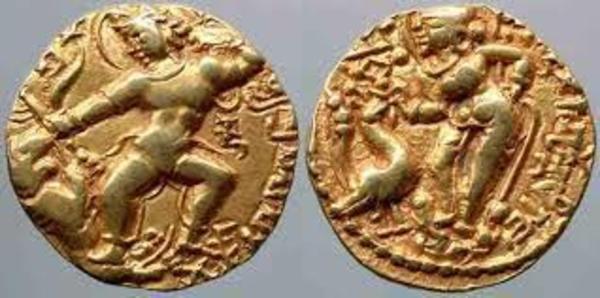 Gupta Coins pictured above. ©️Vikram University.
 The greatest of the Gupta emperors of ancient India, Samudra, minted special gold coins depicting him slaying tigers. Tippu Sultan even vented his frustration at his inability to defeat the British by ordering a special life-size toy, replete with sound, of a tiger mauling a British soldier.
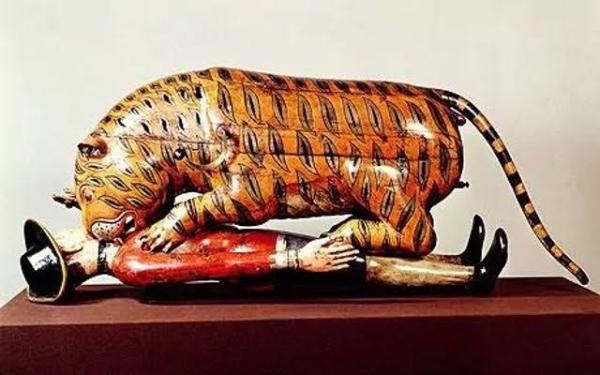 The life size toy was declared a work of art. ©️ Wikipedia
 In addition to the benefits to humans that come from the ecological services provided by the forests which we must conserve to save these magnificent cats, the Tiger also directly affects the local economy in the form of tourism. Tigers are major wildlife attractions and a lot of tourists flock to various areas just to catch a glimpse of them, which in turn provide income for the local communities. A good example is the White tiger in Uganda which can only be found at the Uganda Wildlife Conservation Center (UWEC). Many people travel from all over the world to Uganda to see the only white Tiger in Africa.
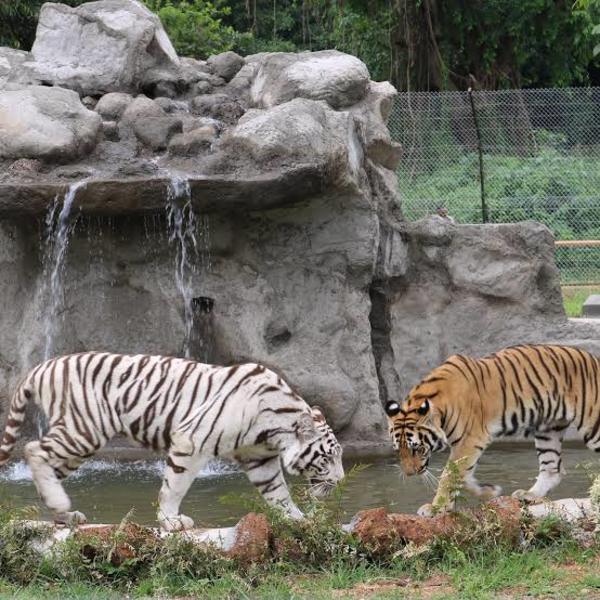 Uganda’s only white tiger, Yura at the Uganda Wildlife Conservation Centre.
 According to the business line in India, beyond their value, tigers play a crucial role as top predators in the food chain by maintaining trophic levels and ecological functionalities. These systems are important for our own well-being. They ensure that we get clean water and air, provide natural resources, keep our economy running, food security, the list can go on and on. And thus, tigers are protected to ensure human well-being. However, the implicit intention and necessity of tiger conservation often take a back seat to the animal’s charisma.
However this year, I’m glad to see that Miss World has partnered to promote the Tadoba Festival in Maharastra which puts me in the direct line as an agent of change. The gospel goes beyond India to save the tigers. My people in Uganda and the globe are coming together as our Duty In Saving the Tiger continues.
