




Mar 1, 2024 6:45 AM
In an era of remarkable advancement, it’s disheartening to witness our national treasures, the tigers, facing the threat of poaching. Despite progress, these majestic creatures are confronting numerous dangers that jeopardize their survival in India. Let’s bring these issues to light and rally together to protect our treasured species from the brink of extinction. The beauty of tigers enriches our world, and it’s a sight we must fight to preserve for future generations. Let’s unite our voices and actions to ensure that we never have to face a world devoid of tigers’ majestic presence.
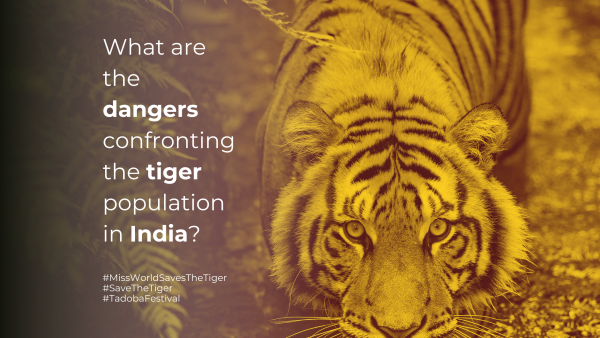
What are the dangers confronting the tiger population in India?
Illegal poaching: A large number of people across the world take pride in possessing the skin, claws, nails, teeth and trophies of the tiger. Every part of the tiger has great market value, thus promoting hunting by professional poachers, local hunters, trappers, pirates and villagers.
Man-animal conflict: When tigers come in contact with human settlements, local antagonism against tigers often erupts into a serious problem.
Encroachment: Human encroachment of tiger habitats for livestock grazing, infrastructure expansion, and farming is a cause of concern.
Peak carrying capacity – Many reserves are approaching the peak of their capacity to sustain their populations. Depletion of prey in tiger zones is a cause of concern.
Small core habitats: The core habitats of the tigers in the country are very small. It is only with the addition of buffer zones that protection has become possible. Fragmentation of tiger habitats is a major cause of decreasing tiger population by reducing opportunities for these animals to inbreed. Few tiger reserves don’t have any tigers left. In the northeast parts of the country, the population has fallen significantly.
Infrastructural development: Linear development such as railways and roadways are a severe threat to the tiger habitats.
Climate change -Due to the global rise in temperatures, the tigers and other species are shifting belts and migrating upwards towards colder regions.
Here are the steps to tackle these challenges!
Creating tiger corridors where the gene pool exchange would take place is necessary.
Corridors have to be built between the existing tiger reserves so that their population can freely move.
Social upliftment of the communities living in and around the forests must be ensured to reduce their economic dependence on forest resources.
Pench Kanha Tiger Reserve is an excellent example of development with conservation, where an elevated national highway passes through the national park without disturbing the wildlife.
Involving the local communities in conservation efforts and sensitizing them about the importance of ecological conservation is the key.
The tiger conservation approach has to be more dynamic and futuristic by mitigating the effects of climate change on wildlife.
Comments

Powered by RoundtableBuilt on infrastructure designed for real-time media. Learn more at RTB.io.© Roundtable 2026. By using this site you agree to the Terms of Use and Privacy Policy